
Why forcing health insurance companies to stop denying coverage on the basis of chronic diseases or pre-existing conditions could help turn the tide on reforming the farm bill.
http://www.nytimes.com/2009/09/10/opinion/10pollan.html?pagewanted=1&_r=1&ref=opinion
Big Food vs. Big Insurance
By MICHAEL POLLAN
Published: September 9, 2009
Berkeley, Calif.
TO listen to President Obama’s speech on Wednesday night, or to just about anyone else in the health care debate, you would think that the biggest problem with health care in America is the system itself — perverse incentives, inefficiencies, unnecessary tests and procedures, lack of competition, and greed.
No one disputes that the $2.3 trillion we devote to the health care industry is often spent unwisely, but the fact that the United States spends twice as much per person as most European countries on health care can be substantially explained, as a study released last month says, by our being fatter. Even the most efficient health care system that the administration could hope to devise would still confront a rising tide of chronic disease linked to diet.
That’s why our success in bringing health care costs under control ultimately depends on whether Washington can summon the political will to take on and reform a second, even more powerful industry: the food industry.
According to the Centers for Disease Control and Prevention, three-quarters of health care spending now goes to treat “preventable chronic diseases.” Not all of these diseases are linked to diet — there’s smoking, for instance — but many, if not most, of them are.
We’re spending $147 billion to treat obesity, $116 billion to treat diabetes, and hundreds of billions more to treat cardiovascular disease and the many types of cancer that have been linked to the so-called Western diet. One recent study estimated that 30 percent of the increase in health care spending over the past 20 years could be attributed to the soaring rate of obesity, a condition that now accounts for nearly a tenth of all spending on health care.
The American way of eating has become the elephant in the room in the debate over health care. The president has made a few notable allusions to it, and, by planting her vegetable garden on the South Lawn, Michelle Obama has tried to focus our attention on it. Just last month, Mr. Obama talked about putting a farmers’ market in front of the White House, and building new distribution networks to connect local farmers to public schools so that student lunches might offer more fresh produce and fewer Tater Tots. He’s even floated the idea of taxing soda.
But so far, food system reform has not figured in the national conversation about health care reform. And so the government is poised to go on encouraging America’s fast-food diet with its farm policies even as it takes on added responsibilities for covering the medical costs of that diet. To put it more bluntly, the government is putting itself in the uncomfortable position of subsidizing both the costs of treating Type 2 diabetes and the consumption of high-fructose corn syrup.
Why the disconnect? Probably because reforming the food system is politically even more difficult than reforming the health care system. At least in the health care battle, the administration can count some powerful corporate interests on its side — like the large segment of the Fortune 500 that has concluded the current system is unsustainable.
That is hardly the case when it comes to challenging agribusiness. Cheap food is going to be popular as long as the social and environmental costs of that food are charged to the future. There’s lots of money to be made selling fast food and then treating the diseases that fast food causes. One of the leading products of the American food industry has become patients for the American health care industry.
The market for prescription drugs and medical devices to manage Type 2 diabetes, which the Centers for Disease Control estimates will afflict one in three Americans born after 2000, is one of the brighter spots in the American economy. As things stand, the health care industry finds it more profitable to treat chronic diseases than to prevent them. There’s more money in amputating the limbs of diabetics than in counseling them on diet and exercise.
As for the insurers, you would think preventing chronic diseases would be good business, but, at least under the current rules, it’s much better business simply to keep patients at risk for chronic disease out of your pool of customers, whether through lifetime caps on coverage or rules against pre-existing conditions or by figuring out ways to toss patients overboard when they become ill.
But these rules may well be about to change — and, when it comes to reforming the American diet and food system, that step alone could be a game changer. Even under the weaker versions of health care reform now on offer, health insurers would be required to take everyone at the same rates, provide a standard level of coverage and keep people on their rolls regardless of their health. Terms like “pre-existing conditions” and “underwriting” would vanish from the health insurance rulebook — and, when they do, the relationship between the health insurance industry and the food industry will undergo a sea change.
The moment these new rules take effect, health insurance companies will promptly discover they have a powerful interest in reducing rates of obesity and chronic diseases linked to diet. A patient with Type 2 diabetes incurs additional health care costs of more than $6,600 a year; over a lifetime, that can come to more than $400,000. Insurers will quickly figure out that every case of Type 2 diabetes they can prevent adds $400,000 to their bottom line. Suddenly, every can of soda or Happy Meal or chicken nugget on a school lunch menu will look like a threat to future profits.
When health insurers can no longer evade much of the cost of treating the collateral damage of the American diet, the movement to reform the food system — everything from farm policy to food marketing and school lunches — will acquire a powerful and wealthy ally, something it hasn’t really ever had before.
AGRIBUSINESS dominates the agriculture committees of Congress, and has swatted away most efforts at reform. But what happens when the health insurance industry realizes that our system of farm subsidies makes junk food cheap, and fresh produce dear, and thus contributes to obesity and Type 2 diabetes? It will promptly get involved in the fight over the farm bill — which is to say, the industry will begin buying seats on those agriculture committees and demanding that the next bill be written with the interests of the public health more firmly in mind.
In the same way much of the health insurance industry threw its weight behind the campaign against smoking, we can expect it to support, and perhaps even help pay for, public education efforts like New York City’s bold new ad campaign against drinking soda. At the moment, a federal campaign to discourage the consumption of sweetened soft drinks is a political nonstarter, but few things could do more to slow the rise of Type 2 diabetes among adolescents than to reduce their soda consumption, which represents 15 percent of their caloric intake.
That’s why it’s easy to imagine the industry throwing its weight behind a soda tax. School lunch reform would become its cause, too, and in time the industry would come to see that the development of regional food systems, which make fresh produce more available and reduce dependence on heavily processed food from far away, could help prevent chronic disease and reduce their costs.
Recently a team of designers from M.I.T. and Columbia was asked by the foundation of the insurer UnitedHealthcare to develop an innovative systems approach to tackling childhood obesity in America. Their conclusion surprised the designers as much as their sponsor: they determined that promoting the concept of a “foodshed” — a diversified, regional food economy — could be the key to improving the American diet.
All of which suggests that passing a health care reform bill, no matter how ambitious, is only the first step in solving our health care crisis. To keep from bankrupting ourselves, we will then have to get to work on improving our health — which means going to work on the American way of eating.
But even if we get a health care bill that does little more than require insurers to cover everyone on the same basis, it could put us on that course.
For it will force the industry, and the government, to take a good hard look at the elephant in the room and galvanize a movement to slim it down.
Showing posts with label Pollan. Show all posts
Showing posts with label Pollan. Show all posts
Thursday, September 10, 2009


Monday, August 3, 2009
Pollan on the decline of cooking

Great essay in the New York Times from Michael Pollan on everything from how cooking has become a spectator sport to the new movie "Julie and Julia" to how a return to cooking could save your health. Like everything that Pollan has ever written, I highly recommend you set aside 20 minutes or so and take your time digesting what he has to say.
Ruhlman's post about Pollan's essay also makes a great point about the distinction between cooks and foodies, which is really quite a large distinction.
Nothing else really needs to be said. Read this stuff because it's a lot better than anything I've ever written. I'm not kidding, damn it. Read it.
Monday, July 13, 2009
See "Food Inc." for free and a great profile of an urban farmer

Will Allen, the ultimate urban farmer and a truly larger than life figure, was profiled in last week's New York Times Magazine. It's a great read and indirectly poses an important question: Can the good food movement be sustained without some sort of subsidy, whether it be in the form of private grant or government pay?
Michael Pollan, when I saw him speak at the Herbst Theater (click here for video), argued that no food system has ever been successful without some sort of subsidy. That's why some have argued it's important that we redirect our government emphasis on commodity crops like corn and wheat and soybeans and reward more complex systems that grow a variety of plants, such as vegetables.
My grandmother told me that she would love if it were economically viable to grow something else besides GMO corn*. Is there any reason the Farm Bill won't pay Will Allen a dime and would discontinue paying my grandparents if they planted a row of broccoli next to the corn?
*Whether it is realistic for octogenarians in South Central Kansas to switch to organic farming at this point is a question better left for another day.
------------------------------------------------------------------------------------------------------------------
http://blogs.sfweekly.com/foodie/2009/07/free_screening_of_food_inc.php
Free Screening of 'Food, Inc.'
Wednesday, Jul. 8 2009 @ 1:30PM

Still haven't seen Food, Inc.? Your procrastination is paying off, for once. Catch a free screening of the startling film -- sponsored nationwide by the burrito chain Chipotle -- on Thursday, July 16, at Embarcadero Center Cinema (One Embarcadero Center) at 7:30 p.m. Get there super early to guarantee yourself a seat; you know how people can be when it comes to free things.
More info on Chipotle's screenings is here, and to get in the spirit before you go to the theater, read SFoodie Editor John Birdsall's conversation with Food, Inc. director Robert Kenner.
Monday, July 6, 2009
Double Feature Sunday: Woody Allen and Food Politics
Is "Food Inc." a movie for the average person?
"Food Inc." is the new documentary* about the way we produce and eat food in America and the latest attack on Nutritional-Industrial Complex. It basically takes Michael Pollan's and Eric Schlosser's writings and reduces them to an easily consumable 90-minute documentary.
Being familiar with just about all the stories in the film, I found it easy to follow and still found myself outraged at the actions of the government and the corporations who are most responsible for our Western diet and all the diseases that come along with it: cancer, obesity, and whathaveyou.

Towards the end, I started wondering if they weren't trying to present too much information or spending too little time on certain aspects. I found myself wanting to hear more about the court cases Monsanto brought against farmers, more from Joel Salatin, or more about what people can do to get involved. I was a little surprised the letters C-S-A weren't mentioned even once.
So I was left wondering if it's a movie that is perfect for elucidating the average viewer who eats at McDonald's and buys groceries at Wal-Mart or if it was simply another sermon to the converted to make us high-fallutin' liberals feel better about spending half our income on fancy food. I honestly don't have a good feel for what the answer to that question is.
And maybe I don't have a great answer to that because so far it has made barely more than a million dollars at a mere 83 theaters** (compare that with 4300 for Michael Bay's latest defecation on celluloid). It still has yet to hit one major outpost in the Corn Belt that I know of, Kansas City. I suspect, though, that the movie is probably intentionally enjoying a slow release so word of mouth buzz can spread. Its $2,900 average per theater puts it way ahead of mainstream movies like "My Sister's Keeper" and "Year One."
So it's proably going to take more time to see if this movie will have any crossover appeal or if it will get lumped in with all the other indie documentaries like "King Corn." I do know that some farmers near where I grew up weren't that impressed. I feel like farmers are the real heroes of the film, but I can see how my grandparents, who grow commodity crops in Pratt, KS, would get upset that Big City-types think that they know what's best for folks on the farm.
So if you've seen the movie, now would be a good time to tell me what you think. And please see if you can't get a somebody who isn't converted to go see the movie and report back.
*Follow link for trailer.
**http://www.boxofficemojo.com/weekend/chart/
-------------------------------------------------------------------------------------------------
"Whatever Works"[insert pun about how well or not well you think the movie works]
Discolure: I am complete Woody Allen apologist. I may recognize the occasional fault in some of his films but I have enjoyed every single one of them on one level or another.
After seeing the man himself in the stands at the marathon Wimbledon final on Sunday, it was a no-brainer to see "Whatever Works" last night.
There are so many things I love about Woody Allen but almost above all, I love that he continues to work no matter what. Even if he were to acknowledge the existence of writer's block, you wouldn't be able to tell because he would still release one or two movies that year.
I love that no matter what else is going on in the world, I can count on that familiar smile coming to my face as a black screen with plain white type appears, old-timey jazz starts playing and I am informed that Jack Rollins and Charles Joffe were executive producers of the movie I'm about to see (even though Charles Joffe is dead), and I'm about to find out some more universal truths about love, death, and the human condition.
I love that though so many themes and plotlines tend to show up again and again, each film seems to be a different statement from the director about himself. Is the initial tone of this film so much more angry because Woody is pissed about what's going in the world? Is he getting cranky in his old age or is it just because he wanted to write a character who would be easier for Larry David to play? Is there any way his overall theme of telling everyone to stop being so damn judgmental is not influenced by everyone in the world judging him for choosing to ignore society and fall in love with the most unlikely of brides?
I suspect many will deride the movie for not being funny enough, for the characters being a little too caricatured, or for the narration direct to the audience just not working. I don't think Larry David is going to ever be successful at not playing himself, but he definitely excelled in the role as Boris. All of the characters were well cast as well and by the closing credits, they had somehow gone from caricatures to dynamic characters.
For a Woody Allen apologist, this was classic latter-day Woody. In the end, I laughed; I learned something; I didn't feel like I wasted $11.
"Food Inc." is the new documentary* about the way we produce and eat food in America and the latest attack on Nutritional-Industrial Complex. It basically takes Michael Pollan's and Eric Schlosser's writings and reduces them to an easily consumable 90-minute documentary.
Being familiar with just about all the stories in the film, I found it easy to follow and still found myself outraged at the actions of the government and the corporations who are most responsible for our Western diet and all the diseases that come along with it: cancer, obesity, and whathaveyou.

Towards the end, I started wondering if they weren't trying to present too much information or spending too little time on certain aspects. I found myself wanting to hear more about the court cases Monsanto brought against farmers, more from Joel Salatin, or more about what people can do to get involved. I was a little surprised the letters C-S-A weren't mentioned even once.
So I was left wondering if it's a movie that is perfect for elucidating the average viewer who eats at McDonald's and buys groceries at Wal-Mart or if it was simply another sermon to the converted to make us high-fallutin' liberals feel better about spending half our income on fancy food. I honestly don't have a good feel for what the answer to that question is.
And maybe I don't have a great answer to that because so far it has made barely more than a million dollars at a mere 83 theaters** (compare that with 4300 for Michael Bay's latest defecation on celluloid). It still has yet to hit one major outpost in the Corn Belt that I know of, Kansas City. I suspect, though, that the movie is probably intentionally enjoying a slow release so word of mouth buzz can spread. Its $2,900 average per theater puts it way ahead of mainstream movies like "My Sister's Keeper" and "Year One."
So it's proably going to take more time to see if this movie will have any crossover appeal or if it will get lumped in with all the other indie documentaries like "King Corn." I do know that some farmers near where I grew up weren't that impressed. I feel like farmers are the real heroes of the film, but I can see how my grandparents, who grow commodity crops in Pratt, KS, would get upset that Big City-types think that they know what's best for folks on the farm.
So if you've seen the movie, now would be a good time to tell me what you think. And please see if you can't get a somebody who isn't converted to go see the movie and report back.
*Follow link for trailer.
**http://www.boxofficemojo.com/weekend/chart/
-------------------------------------------------------------------------------------------------
"Whatever Works"[insert pun about how well or not well you think the movie works]
Discolure: I am complete Woody Allen apologist. I may recognize the occasional fault in some of his films but I have enjoyed every single one of them on one level or another.
After seeing the man himself in the stands at the marathon Wimbledon final on Sunday, it was a no-brainer to see "Whatever Works" last night.
There are so many things I love about Woody Allen but almost above all, I love that he continues to work no matter what. Even if he were to acknowledge the existence of writer's block, you wouldn't be able to tell because he would still release one or two movies that year.
I love that no matter what else is going on in the world, I can count on that familiar smile coming to my face as a black screen with plain white type appears, old-timey jazz starts playing and I am informed that Jack Rollins and Charles Joffe were executive producers of the movie I'm about to see (even though Charles Joffe is dead), and I'm about to find out some more universal truths about love, death, and the human condition.
I love that though so many themes and plotlines tend to show up again and again, each film seems to be a different statement from the director about himself. Is the initial tone of this film so much more angry because Woody is pissed about what's going in the world? Is he getting cranky in his old age or is it just because he wanted to write a character who would be easier for Larry David to play? Is there any way his overall theme of telling everyone to stop being so damn judgmental is not influenced by everyone in the world judging him for choosing to ignore society and fall in love with the most unlikely of brides?
I suspect many will deride the movie for not being funny enough, for the characters being a little too caricatured, or for the narration direct to the audience just not working. I don't think Larry David is going to ever be successful at not playing himself, but he definitely excelled in the role as Boris. All of the characters were well cast as well and by the closing credits, they had somehow gone from caricatures to dynamic characters.
For a Woody Allen apologist, this was classic latter-day Woody. In the end, I laughed; I learned something; I didn't feel like I wasted $11.
Wednesday, July 1, 2009
Food Safety First - Send Bill Marler Packin' to DC!
It’s time to get serious about food safety.
The USDA has yet to appoint the Under Secretary for Food Safety and Inspection Service (FSIS) – and it’s time that we had a real reformer at the USDA.
Every year in the U.S. an estimated 76 million people get sick with food borne illnesses and 5,000 die. One person who knows this fact better than anybody else in the country is food safety lawyer Bill Marler.

You may remember him as the generous patron who offered to pay for author Michael Pollan’s visit to Washington State University after his best-selling book, The Omnivore’s Dilemma, had been removed from the freshman reading program. But Marler’s been known as a leading advocate for food safety for nearly two decades.
In 1993, Marler served as the lead attorney in the famous Jack in the Box E.coli outbreak. Since then, he’s led the charge in protecting the rights of consumers against unsafe practices by major corporations.
As someone who’s been on the front lines of America’s food safety crisis for nearly 20 years, he has seen first hand the devastation that can be left in the wake of poor food safety practices. We believe that Marler understands the problems that create food safety outbreaks and knows the solutions. He believes that inspection is an important process that not only protects consumers but could save farmers, hospitals and businesses money as well. He understands the importance of regionalizing our food system to build more processing plants that will create a safer food supply and real jobs for rural America.
Known as a fair and fierce opponent, Marler is the perfect candidate to help reform America’s bankrupt food safety system from the ground up. As unprecedented food safety legislation winds its way through Congress that will redefine the Food and Drug Administration’s role in keeping America’s food safe, it’s important that the USDA has an individual with a strong commitment to food safety and consumer health. Bill Marler is that candidate.
Write to President Obama and Secretary Vilsack today and ask them to appoint Bill Marler as the next Under Secretary for food safety at the USDA.
It’s time that America leads the way in having the safest food possible. Bill Marler can make that happen.
Click here to send Bill Marler to the USDA and make our nation’s food supply more safe. http://www.fooddemocracynow.org/?p=428
Sustainably yours,
Food Democracy Now!
If you'd like to see Food Democracy Now!'s grassroots work continue, please consider donating as little as $10 or $25. We appreciate your support! http://www.fooddemocracynow.org/?page_id=9
Please write President Obama and Secretary Vilsack today!
You can cut and paste the below letter and send it to President Obama at the link below
and email Secretary Vilsack at the email below.
SAMPLE LETTER:
Send Comments to the White House: http://www.whitehouse.gov/contact/
or
Email Secretary Vilsack: AgSec@usda.gov
Sample Letter:
Dear President Obama and Secretary Vilsack
In an age of record food safety outbreaks, it’s important that America has a reformer on the frontlines in the effort to rebuild our nation’s broken food safety system. In just the past few weeks, U.S. consumers have had to contend with E.coli O157:H7 found in Nestle Toll House cookie dough and a massive new E.coli outbreak in over 421,000 pounds of beef.
On June 24 the USDA’s Food Safety and Inspection Service (FSIS) issued a Class 1 recall for primal cuts of beef from the JBS Swift Beef Company in Greeley, Colorado. According to the FSIS website, this recall has a high health risk to American consumers and at a time when they should be relaxing and enjoying the festivities of our nation’s Independence Day, mothers and cooks will have to worry if their children or loved ones could get sick from eating tainted meat on the 4th of July.
It’s time to put this to an end.
I believe it’s important that America leads the way in food safety for the 21st century and support our nation’s leading food safety attorney, Bill Marler, being selected to lead the way as the next Under Secretary of the FSIS.
America can no longer afford to appease an industry that has made our food less safe and continues to put lives at risk because of convenience or profit. Please show us that you care about our nation’s consumers and children by nominating Bill Marler to become the next head of the FSIS.
Sincerely,
[Your name
city & state here]
The USDA has yet to appoint the Under Secretary for Food Safety and Inspection Service (FSIS) – and it’s time that we had a real reformer at the USDA.
Every year in the U.S. an estimated 76 million people get sick with food borne illnesses and 5,000 die. One person who knows this fact better than anybody else in the country is food safety lawyer Bill Marler.
You may remember him as the generous patron who offered to pay for author Michael Pollan’s visit to Washington State University after his best-selling book, The Omnivore’s Dilemma, had been removed from the freshman reading program. But Marler’s been known as a leading advocate for food safety for nearly two decades.
In 1993, Marler served as the lead attorney in the famous Jack in the Box E.coli outbreak. Since then, he’s led the charge in protecting the rights of consumers against unsafe practices by major corporations.
As someone who’s been on the front lines of America’s food safety crisis for nearly 20 years, he has seen first hand the devastation that can be left in the wake of poor food safety practices. We believe that Marler understands the problems that create food safety outbreaks and knows the solutions. He believes that inspection is an important process that not only protects consumers but could save farmers, hospitals and businesses money as well. He understands the importance of regionalizing our food system to build more processing plants that will create a safer food supply and real jobs for rural America.
Known as a fair and fierce opponent, Marler is the perfect candidate to help reform America’s bankrupt food safety system from the ground up. As unprecedented food safety legislation winds its way through Congress that will redefine the Food and Drug Administration’s role in keeping America’s food safe, it’s important that the USDA has an individual with a strong commitment to food safety and consumer health. Bill Marler is that candidate.
Write to President Obama and Secretary Vilsack today and ask them to appoint Bill Marler as the next Under Secretary for food safety at the USDA.
It’s time that America leads the way in having the safest food possible. Bill Marler can make that happen.
Click here to send Bill Marler to the USDA and make our nation’s food supply more safe. http://www.fooddemocracynow.org/?p=428
Sustainably yours,
Food Democracy Now!
If you'd like to see Food Democracy Now!'s grassroots work continue, please consider donating as little as $10 or $25. We appreciate your support! http://www.fooddemocracynow.org/?page_id=9
Please write President Obama and Secretary Vilsack today!
You can cut and paste the below letter and send it to President Obama at the link below
and email Secretary Vilsack at the email below.
SAMPLE LETTER:
Send Comments to the White House: http://www.whitehouse.gov/contact/
or
Email Secretary Vilsack: AgSec@usda.gov
Sample Letter:
Dear President Obama and Secretary Vilsack
In an age of record food safety outbreaks, it’s important that America has a reformer on the frontlines in the effort to rebuild our nation’s broken food safety system. In just the past few weeks, U.S. consumers have had to contend with E.coli O157:H7 found in Nestle Toll House cookie dough and a massive new E.coli outbreak in over 421,000 pounds of beef.
On June 24 the USDA’s Food Safety and Inspection Service (FSIS) issued a Class 1 recall for primal cuts of beef from the JBS Swift Beef Company in Greeley, Colorado. According to the FSIS website, this recall has a high health risk to American consumers and at a time when they should be relaxing and enjoying the festivities of our nation’s Independence Day, mothers and cooks will have to worry if their children or loved ones could get sick from eating tainted meat on the 4th of July.
It’s time to put this to an end.
I believe it’s important that America leads the way in food safety for the 21st century and support our nation’s leading food safety attorney, Bill Marler, being selected to lead the way as the next Under Secretary of the FSIS.
America can no longer afford to appease an industry that has made our food less safe and continues to put lives at risk because of convenience or profit. Please show us that you care about our nation’s consumers and children by nominating Bill Marler to become the next head of the FSIS.
Sincerely,
[Your name
city & state here]
Friday, May 29, 2009
Kansas City: Leading the pack yet again

http://www.kansascity.com/105/story/1218210.html
The mighty Paris of the Plains is getting ready to unveil a one-of-a-kind garden, which seems at first glance to be a combo art gallery and science museum for agriculture. Michael Pollan was given a sneak peek and seemed to be more than impressed by the greatest city in the world's newest contribution to society.
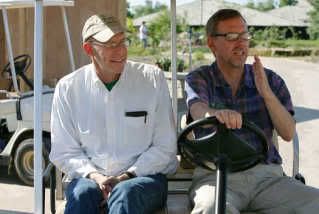
Powell Gardens, which is just outside the city, has spent $9.2 million to produce a 12-acre garden that will used to teach visitors about how food is grown and to inspire them to eat real food. The "edible landscape" is the largest and first of its kind and will open June 14th to the public. No surprise to anyone familiar with the city that Kansas City would be leading the way on this as it has in countless other arenas. (By the way, according to the article, Pollan's crowd at Unity Temple was the largest of his book tour).
Also, check out The Star's photo gallery. The place looks like it will be more a teaching tool than anything, which is good because most actual farms are far too busy and ill-equipped to center their businesses around education. Hopefully people will come to Powell Gardens and then go volunteer on a farm or perhaps even turn part of their lawns into more productive green space.
I, for one, can't wait to get back to the Midwest and check out the newest monument to sustainable agriculture*.
* As well as eat some real BBQ and check out the new K.
Wednesday, May 27, 2009
"The Omnivore's Dilemma" a Controversial Book?

http://aglaw.blogspot.com/2009/05/pollan-book-selected-dropped-from-wsu.html
Apparently, The Omnivore's Dilemma was selected, then deselected, then selected again at Washington State for some sort of freshman reading list. WSU is a former land grant school (like K-State), so I'm sure agricultural issues are a big deal there.
The first comment on the blog is from an agricultural lawyer who says that it was a shame that the book was dropped because more discourse is a good thing, but the young lawyer also goes out of his way to paint Pollan as one of the most biased reporters on the topic. Another friend of mine asked me the other day if Pollan was super pretentious when I saw him speak. At the time, I thought it was a rather out-of-left-field question, but maybe now it makes a little more sense.
Is Pollan seen as an elitist member of the Liberal Media who has an axe to grind with industrial agriculture? I never even knew that this was a viewpoint held by anyone. He certainly doesn't paint the system with a positive brush, but I see little bias in his reporting. It seems to me that he often presents the point of view of agribusiness*.
My grandparents are traditional farmers, and I know a great deal about their point of view. I think they and their fellow farmers are adequately represented in Pollan's books. In fact, I see him as an advocate of any traditional farmers like my grandparents. He sees problems with the system that tells them what to grow.
Then again, I've never been very good at spotting bias in The Media, so maybe I'm not the best judge of what's straight truth-telling and what is "pusing an agenda."
* Right before he debunks it.
Subscribe to:
Posts (Atom)

 Posts
Posts

